
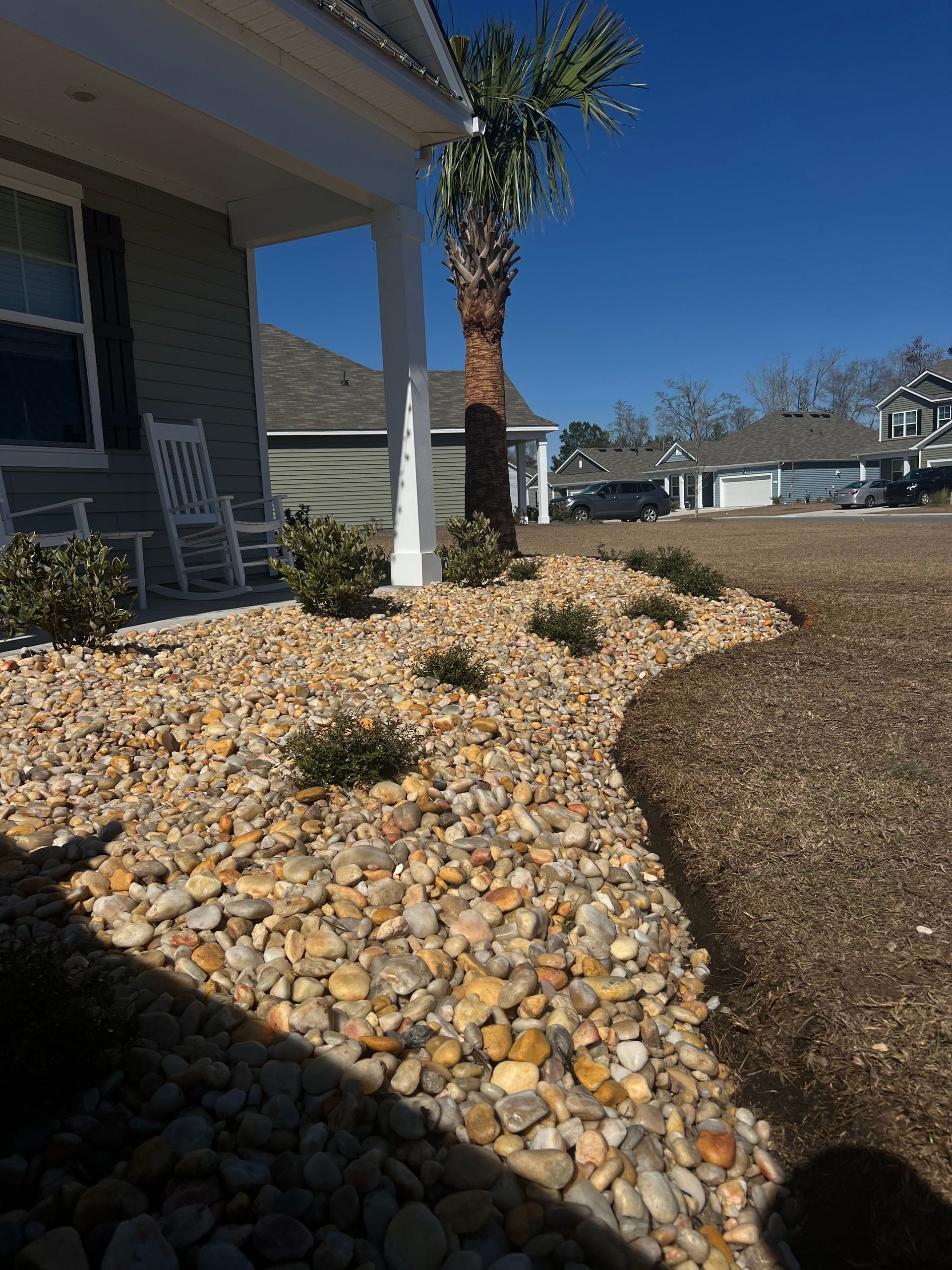
Landscape Features That Require No Seasonal Refresh
Rock Install in Myrtle Beach for beds, borders, and drainage areas that withstand coastal storms without displacement
Heavy rain events common along the coast wash away mulch and expose soil in planting beds, creating maintenance cycles that require annual replenishment and constant cleanup after storms. Decorative rock installation provides permanent ground cover that stays in place through wind and water exposure while suppressing weed growth and defining landscape zones with clean visual boundaries. Aguilar M Landscaping selects stone sizes and styles suited to your design intent, from small river rock that fills tight spaces around plantings to larger cobbles that create bold textural contrast along property edges and drainage swales.
Installation begins with clearing existing material and installing landscape fabric that blocks weed germination while allowing water to drain through to the soil beneath. Rock is then spread at depths calculated to provide full coverage without excessive weight on plants or drainage interference. In areas where water flows during rain, stone size and placement are adjusted to slow runoff and prevent erosion rather than simply covering the surface without regard for water movement patterns.
Schedule a design consultation to evaluate stone options and determine coverage areas for your landscape.
The Difference Between Decorative and Functional Rock Placement
Rock serves two distinct purposes depending on placement: decorative applications create visual interest and reduce maintenance in planting beds, while functional installations manage drainage and prevent erosion in areas where water concentrates during storms. Decorative rock is selected primarily for color and texture that complements surrounding plants and hardscaping, with sizes chosen to fit the scale of the bed without overwhelming smaller plantings. Functional drainage rock is sized and placed to slow water velocity, trap sediment, and allow infiltration without washing away during high-flow events common in Myrtle Beach's thunderstorm season.
After installation, your landscape beds maintain a consistent, polished appearance year-round without the fading and decomposition that mulch undergoes in coastal heat and humidity. Weeds become far less frequent as the fabric barrier and rock layer block sunlight from reaching the soil surface, and the areas around trees and ornamental plantings remain clean without the seasonal refresh cycles required by organic ground covers. Drainage zones continue functioning as designed, with rock staying in place and water moving through without creating gullies or exposing soil.
Rock installation does not eliminate all maintenance, as leaves and debris still accumulate on the surface and require periodic removal to maintain appearance. Over time, some weed seeds may germinate in organic matter that settles between stones, though this occurs far less frequently than in mulched beds. Stone color may fade gradually under intense sun exposure, but the material itself does not break down or require replacement like wood-based mulches.
What Property Owners Usually Ask
Questions about rock installation typically focus on material selection, how it compares to mulch, and whether it can be combined with other landscape features.
What size and type of rock works best for planting beds?
Smaller river rock and pea gravel suit beds with dense plantings and narrow spaces, while larger cobbles and decorative boulders work better for open areas and borders where visual impact is the primary goal.
How does rock installation affect plant health compared to mulch?
Rock does not add organic matter to the soil as mulch does when it decomposes, but it also does not retain heat in the same way, which can be beneficial in Myrtle Beach's hot summers when mulch can stress shallow-rooted plants.
Can rock be used in areas where water drains during storms?
Stone sized appropriately for the flow rate slows runoff and prevents erosion while allowing water to infiltrate, making it ideal for swales, drainage channels, and low spots where mulch would wash away during heavy rain.
How is landscape fabric installed beneath the rock?
Fabric is laid over cleared soil and cut to fit around existing plants, then overlapped at seams to prevent gaps where weeds could emerge, with the rock layer placed on top at sufficient depth to hold the fabric in place and block sunlight.
What happens if I want to change the landscape design later?
Rock can be removed and relocated or replaced with different material, though this requires more effort than refreshing mulch, making initial design planning important to avoid future reinstallation costs.
Aguilar M Landscaping provides custom rock installation that integrates with your existing plantings, hardscaping, and drainage requirements. Contact us to review stone selections and discuss design options that reduce maintenance while improving the structure and appearance of your landscape beds and borders.