Structures That Prevent Soil Movement and Erosion
Retaining Wall in Myrtle Beach for properties with elevation changes and ongoing erosion concerns
Coastal soil conditions in the Myrtle Beach area create specific challenges for properties with elevation changes, where moisture saturation and sandy composition accelerate soil movement during heavy rainfall. Aguilar M Landscaping builds retaining walls that manage these grading issues while providing structured support for residential yards and commercial properties facing erosion control needs. The walls integrate drainage systems designed specifically for the high water table and seasonal storm patterns common to this region.
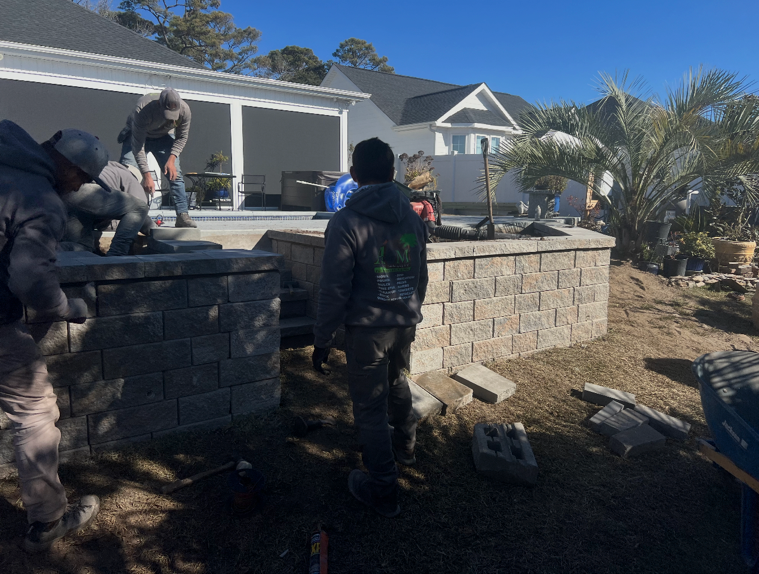
Retaining wall construction addresses the mechanical problem of soil pressure on sloped properties, where gravity and water flow cause gradual land shifting that undermines landscaping and threatens foundation stability. The installation process includes excavation to stable subsoil, base preparation with compacted aggregate, and material selection suited for moisture exposure and salt air typical of coastal environments.
Schedule a property evaluation to identify specific grading and erosion concerns on your site.
How Proper Retaining Walls Control Water and Soil
The construction sequence begins with site excavation and base compaction, followed by installation of drainage systems behind the wall structure to redirect water away from retained soil. Materials are selected based on the height requirements, soil composition analysis, and exposure to coastal moisture, with each course leveled and secured to handle lateral pressure from saturated earth during storm events.
Once the wall is completed with integrated drainage, you notice that water no longer pools at grade transitions, soil remains in place during rain events, and previously unusable sloped areas become stable, level sections suitable for planting or hardscaping. The structure creates defined outdoor zones where elevation previously made landscaping or construction impractical.
The drainage component typically involves perforated pipe positioned at the base behind the wall, surrounded by gravel to filter water and prevent sediment buildup that would increase pressure and compromise wall integrity over time. This system is essential in areas where storm runoff and tidal water table fluctuations create persistent saturation conditions.
What Property Owners Usually Ask
Questions about retaining wall construction often focus on material selection, drainage requirements, and how the structure performs in coastal weather conditions specific to this region.
What materials work best for coastal retaining walls?
Material selection depends on wall height, soil type, and exposure to salt air and moisture, with options including concrete block, natural stone, and treated timber, each offering different durability and aesthetic characteristics suited to Myrtle Beach's humid subtropical climate.
How does drainage behind the wall prevent failure?
The drainage system uses perforated pipe and gravel backfill to redirect water away from retained soil, preventing hydrostatic pressure buildup that causes walls to lean, crack, or collapse during heavy rainfall common to this area.
When should a retaining wall be considered instead of regrading?
Walls become necessary when slope exceeds stable angles for the soil type present, when usable yard space is limited and regrading would sacrifice too much area, or when existing structures prevent extensive earth movement.
What height limitations exist for retaining wall construction?
Walls exceeding certain heights typically require engineering analysis and permits, with specific thresholds varying based on local building codes and the structural load the wall must support.
How does soil composition affect wall design?
Sandy coastal soils drain differently than clay-heavy soils, affecting drainage system design, base depth requirements, and material selection to ensure the wall handles lateral pressure without shifting or settling over time.
Aguilar M Landscaping designs retaining walls with drainage integration suited to coastal soil and moisture conditions throughout the Greater Myrtle Beach Area. Request a consultation to assess your property's grading challenges and review material options.